Tree work safety: what to know before a crew climbs your trees
By Dana Whitfield · Updated 2026-07-26
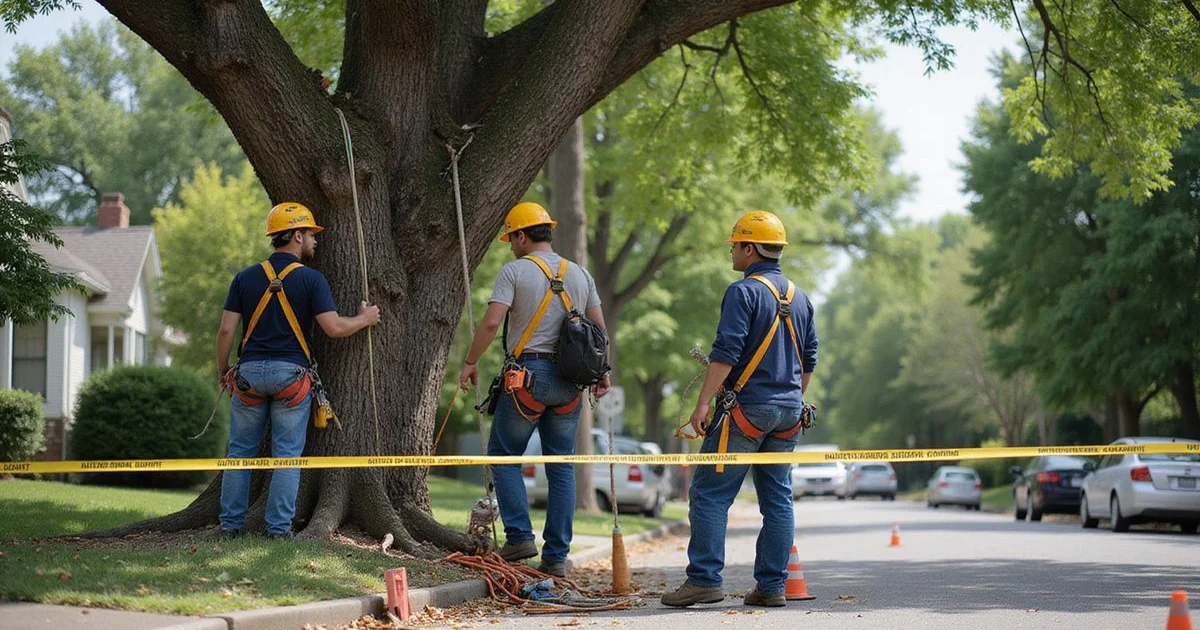
This article covers general safety information about tree work. It is not a substitute for a professional on-site risk assessment, and any concerning tree condition should be evaluated by a qualified professional.
Tree work carries a different risk profile than most yard maintenance. A mowing mistake means a missed patch of grass. A tree work mistake, at height and with real weight involved, can mean serious injury or significant property damage. Understanding what makes it hazardous helps explain why a careful crew moves the way it does.
What actually makes tree work dangerous
- Height and falling weight. A large limb or section of trunk carries enormous force by the time it reaches the ground, and predicting exactly where it lands isn’t always simple, especially with wind or an unusual lean.
- Hidden decay or rot. A tree can look structurally sound from the ground while carrying internal decay that changes how it behaves under a chainsaw cut.
- Proximity to power lines. Contact with an energized line, directly or through a falling branch, is a serious electrical hazard, which is why utility-adjacent tree work often requires special coordination.
- Equipment risk. Chainsaws, chippers, and rigging systems are all capable of causing serious injury when used incorrectly or without proper protective equipment.
What a careful crew does differently
| Practice | Why it matters |
|---|---|
| Assesses the tree’s condition and lean before cutting | Hidden rot or an unexpected lean changes how a tree falls |
| Establishes a clear exclusion zone | Keeps bystanders well outside the range of falling debris |
| Uses proper rigging for sections near structures | Lowers cut sections in a controlled way instead of letting them free-fall |
| Coordinates with the utility company for work near power lines | Avoids contact with energized lines during the job |
| Wears appropriate protective equipment | Reduces injury risk from chainsaws, falling debris, and chippers |
What homeowners should do during the work
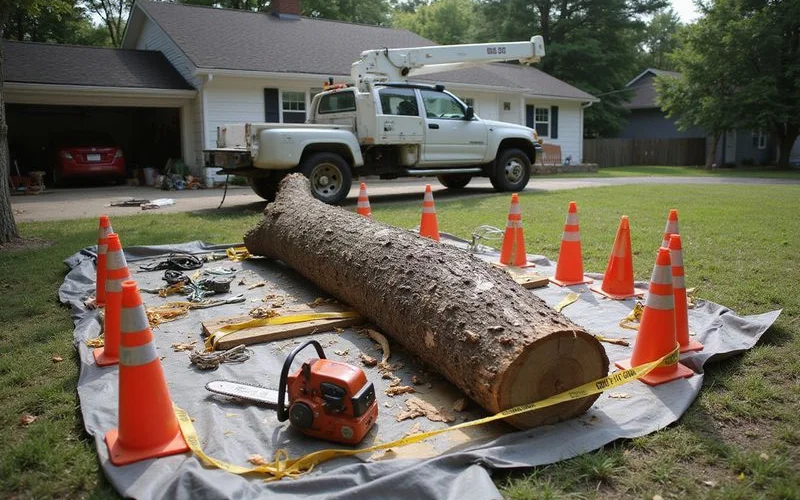
Stay well outside the marked work zone, and keep children and pets indoors or clearly away from the area for the duration of the job. It might feel like an overreaction for what looks like routine yard work from a distance, but the margin for error with falling limbs is small, and standing at a “safe-looking” distance often isn’t actually safe.
If you notice anything that concerns you, like debris landing closer than expected or a section not falling the way it was described, mention it to the crew rather than assuming it’s fine.
Spotting a hazardous tree before it’s an emergency
Some warning signs are visible without professional training: large dead branches throughout the canopy, a noticeable lean that’s changed recently, mushrooms or fungal growth at the base, or cracks along the trunk. None of these confirm a tree is about to fail, but any of them is a reasonable trigger to have the tree professionally assessed rather than wait. Waiting matters for more than safety too; the tree fall liability guide covers how a known hazard left unaddressed can affect responsibility if the tree eventually comes down.
Weather conditions matter more than people expect
Wind is one of the more underappreciated hazards in tree work, since it affects both where a cut section actually falls and how stable a climber is at height. A responsible crew will delay or reschedule work on a windy day rather than push through on a tight timeline, and a homeowner pressing for same-day completion regardless of conditions is putting the crew, and the property, at unnecessary risk. Rain adds its own complication, making bark and equipment slicker and reducing visibility for anyone working aloft.
Insurance is not optional
Beyond general liability coverage for property damage, tree companies working at height should also carry coverage for their crew, since tree work has one of the higher injury rates among outdoor trades. If a worker is injured on your property and the company lacks proper coverage, a homeowner can end up unexpectedly exposed. Asking to see proof of insurance before work begins, rather than taking a verbal assurance at face value, is a reasonable and common request.
Choosing a crew with safety in mind
A company willing to talk through their safety practices, insurance coverage, and how they handle work near structures or utility lines is generally a better sign than one that brushes past the question. Browsing tree service listings, ranked with a published scoring method that weighs review sentiment alongside completeness, is a reasonable starting point. The Connecticut landscaper directory home page covers every other category if the same property needs more than tree work addressed.
Common questions
- What makes tree removal more dangerous than other yard work?
- Height, falling weight, and unpredictable factors like wind or hidden rot combine in a way most yard work doesn't. A miscalculated cut or fall direction can cause serious injury or property damage quickly.
- Should I ask a tree company about their safety practices?
- Yes. A company confident in its safety record will answer questions about training, equipment, and how they handle work near power lines without hesitation.
- Is it safe to stay outside near the work area during a tree removal?
- No. A cleared exclusion zone around the drop area is standard practice, and staying well outside it during active cutting is important even if it feels like you're missing the action.
- What should I do if I notice a hazardous-looking tree on my property?
- Avoid the area underneath it, especially during windy weather, and have it assessed by a professional promptly rather than waiting to see what happens.
Related on this site
- Browse tree service providers
- Best tree service in Connecticut →
- Tree removal cost in Connecticut: what drives the price
- Hiring a tree service: what to expect, step by step
- Who's responsible when a tree falls in Connecticut: liability basics
- Lawn chemical and pesticide safety for kids and pets
- All guides →