Hiring a tree service: what to expect, step by step
By Dana Whitfield · Updated 2026-06-16
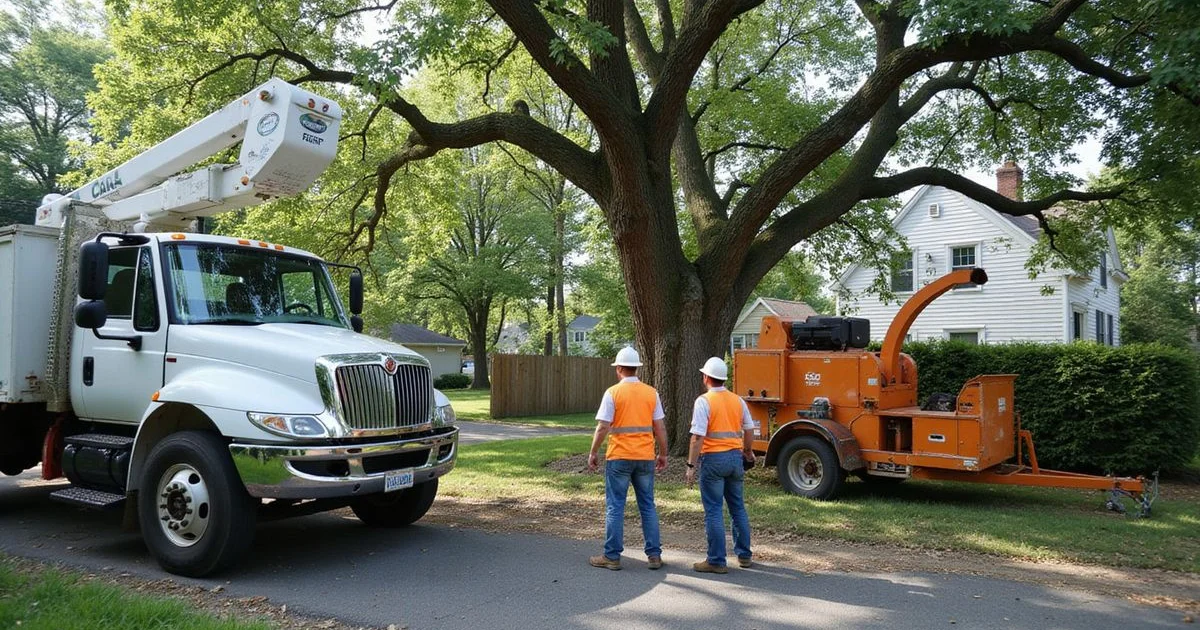
Tree work looks straightforward from the outside: a crew shows up, cuts the tree, and leaves. In practice, a well-run job follows a pattern, and knowing that pattern makes it easier to tell a careful crew from one that’s rushing.
Step 1: The initial assessment
A tree service worth hiring walks the property before quoting anything firm. They’re looking at trunk diameter, lean direction, proximity to the house or power lines, and access for equipment. This is also when they check for signs of disease, rot, or storm damage that might change how the tree needs to come down.
If credentials matter to you, this is the point to ask about them. Some arborists hold professional certifications tied to tree biology and risk assessment, which is worth asking about directly if the tree is large, diseased, or close to a structure.
Step 2: The quote
A firm quote should spell out what’s included: the removal or trim itself, stump handling, cleanup, and debris haul-away. Vague quotes that only cover “the tree” and leave everything else as a surprise add-on are a common source of disputed final bills.
| Job stage | What a good crew does | What to watch for |
|---|---|---|
| Assessment | Walks the site, checks access and condition | A quote given with no site visit for anything beyond a small tree |
| Quote | Itemizes removal, stump, and cleanup separately | A single vague number with no breakdown |
| Day of work | Sets up a controlled drop zone, protects nearby structures | Rushing without protecting fences, gardens, or roofs |
| Cleanup | Hauls debris, chips brush, leaves the site clean | Leaves logs or brush “for you to deal with” without saying so upfront |
Step 3: The day of the work
On the day, expect the crew to set up a controlled work zone, which might mean roping off part of the yard or laying down protective boards near a driveway or garden bed. For larger trees, sections come down in pieces rather than all at once, especially near a house or fence.
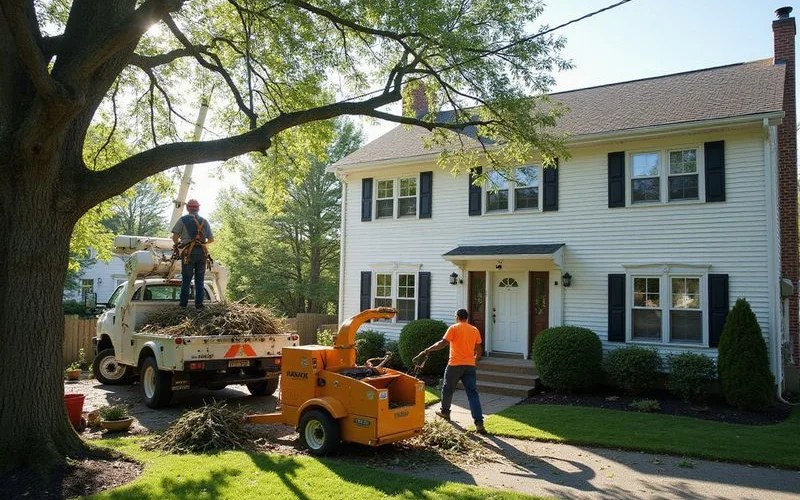
This is also when rigging and equipment choices matter most. A crew with the right gear for a tight yard works differently than one relying on brute force, and that difference shows up both in the final cost and in how much of the surrounding landscaping survives the job intact. Crew safety shapes these choices as much as cost does; the tree work safety guide covers what a professional crew does to protect its climbers and your property while the cutting happens.
Step 4: Cleanup and final walk-through
Before the crew leaves, walk the property with them. Confirm the stump was handled the way the quote described, check that debris is gone or piled where agreed, and look for any damage to the lawn, beds, or fencing that should be addressed before they pack up. A crew confident in their work will welcome this walk-through rather than rush past it.
What happens after the crew leaves
If the job included stump grinding, expect a mound of wood chips left where the stump used to be, since the grinding process produces far more debris than it removes. Some companies clear this as part of the job, others leave it for the homeowner to spread or haul away, so confirm which applies before the crew packs up rather than discovering it afterward. Grass seed for the bare patch left behind is sometimes included, sometimes an extra, and worth asking about if you’d rather not deal with reseeding yourself.
For larger jobs spanning more than a day, ask what the property looks like at the end of each day versus the end of the job. A responsible crew keeps walkways clear and equipment secured overnight even mid-project, rather than leaving a hazard until the final cleanup.
What separates a good hire from a risky one
The complaints that show up most often in this industry aren’t about the cutting itself, they’re about follow-through: incomplete cleanup, inconsistent communication, or a crew that doesn’t return for a promised follow-up visit. Asking pointed questions at the quote stage, and confirming what’s included in writing, heads off most of these problems before they start.
Browsing tree service listings with an eye toward recent, detailed reviews (not just star counts) tends to surface crews that are consistent on these points. For a look at how those rankings are put together, the scoring method explains the weighting behind them, and the Connecticut landscaper directory covers every other category if the same property needs more than tree work done.
Common questions
- Does a tree service need to see the tree in person before quoting a firm price?
- For anything beyond a small, easily accessible tree, yes. Access, condition, and what's nearby all affect the job, and those are hard to judge accurately from a photo or phone description.
- How long does a typical tree removal or trimming job take?
- A single tree removal often wraps in a few hours to a full day, depending on size and access. Larger jobs involving multiple trees or difficult rigging can stretch across more than one day.
- What should be included in cleanup?
- Ask specifically. Full-service cleanup usually means hauling branches and logs off-site and cleaning up wood chips, but some quotes leave the wood on the property or charge extra for chipping and haul-away.
- Do I need to be home during the work?
- Not necessarily, but it helps for the initial walk-through and final inspection, so you can confirm the scope matches what was discussed and check the cleanup before the crew leaves.
Related on this site
- Browse tree service providers
- Best tree service in Connecticut →
- Tree removal cost in Connecticut: what drives the price
- Who's responsible when a tree falls in Connecticut: liability basics
- Tree work safety: what to know before a crew climbs your trees
- DIY vs. hiring a landscaper in Connecticut: when each makes sense
- All guides →