Who's responsible when a tree falls in Connecticut: liability basics
By Dana Whitfield · Updated 2026-07-06
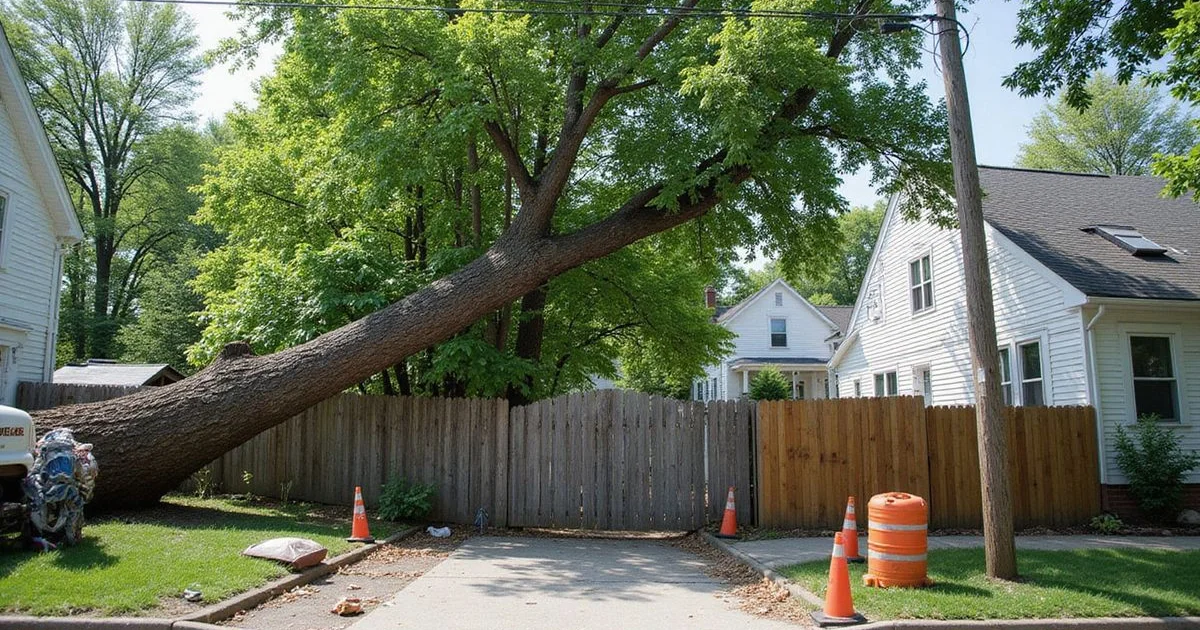
This article explains general patterns in how tree-fall liability tends to work in Connecticut. It is not legal advice, and it does not address the facts of any specific situation. Talk to your insurance company or an attorney for an actual claim or dispute.
A fallen tree after a storm raises an immediate practical question alongside the mess: who pays for this. The general answer depends less on whose property the tree was rooted on and more on whether the damage or the tree’s condition was foreseeable.
The general pattern
In broad terms, courts and insurers tend to look at whether the tree’s owner knew, or reasonably should have known, that the tree posed a hazard before it fell. A tree that was visibly dead, leaning, or had been flagged as a concern before the incident is treated differently than a healthy tree that came down during an extreme, unpredictable storm.
| Scenario | General tendency (not a legal conclusion) |
|---|---|
| Healthy tree fails in an extreme storm | Often treated as an act of nature, with insurance covering the damaged party’s own losses |
| Visibly dead or hazardous tree was known and unaddressed | Owner is more likely to bear liability for resulting damage |
| Tree roots or overhanging limbs cause gradual damage over time | Can be treated differently than a sudden storm event, since it may reflect ongoing neglect |
| Tree falls entirely within its own owner’s property, no other damage | Usually the owner’s own problem to clean up and address |
Insurance usually responds first
For most homeowners, the practical starting point after storm damage isn’t a liability argument with a neighbor, it’s a call to your own insurance company. Most homeowners policies cover damage to your own structure from a fallen tree regardless of which property the tree came from, since the policy is responding to the damage rather than requiring you to establish fault first. Your insurer may separately pursue the tree owner’s insurer to recover costs, a process that generally happens behind the scenes rather than something homeowners need to manage directly.
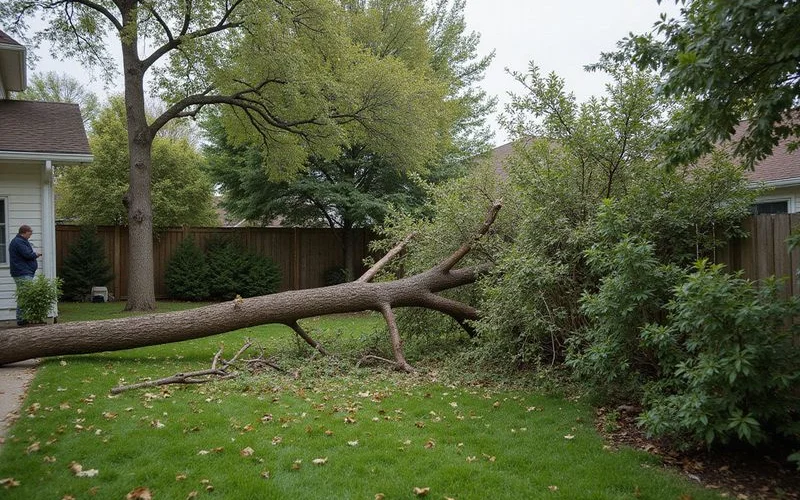
What to do when a tree falls
Document the scene with photos before anything is moved, especially if a structure was damaged. Contact your insurance company promptly, since claims often have reporting windows. If there’s any immediate safety hazard, like a limb resting on a power line or blocking emergency access, address that first regardless of documentation concerns.
For a genuinely hazardous tree that hasn’t fallen yet, such as one that’s visibly dead or leaning toward a shared property line, raising it directly with the neighbor and documenting that conversation can matter later if the tree eventually does fall.
Trees along a shared property line
Trees growing directly on a boundary line raise their own wrinkle, since both neighbors can have an ownership interest in the same tree depending on where the trunk actually sits. Removing or significantly trimming a boundary tree without the other owner’s agreement can itself become a dispute, separate from any liability question about damage. If a boundary tree is a concern, a conversation with the neighbor before any work happens, ideally in writing, tends to head off bigger problems later.
Renters and tenants
If you rent rather than own, responsibility for a fallen tree or storm damage typically runs to the property owner rather than the tenant, though a lease can address specifics like who’s responsible for reporting hazards or clearing minor debris. Renters dealing with tree damage should generally notify the landlord promptly and keep their own documentation, since the insurance conversation happens at the property-owner level in most cases.
When to bring in a professional beyond a landscaper
Liability disputes, especially ones involving significant property damage or a disagreement between insurers, are a legal matter, not a landscaping one. An arborist can document a tree’s condition and provide a professional risk assessment, which is often useful evidence, but an actual dispute over responsibility is worth discussing with an attorney.
For assessing a tree that concerns you before it becomes a liability question, tree service listings in the directory include companies that can evaluate a hazardous tree and document its condition; the hiring a tree service guide covers what that first evaluation call typically looks like. Rankings follow a published scoring method, and the Connecticut landscaper directory covers every other category if storm cleanup extends beyond tree work.
Common questions
- If my neighbor's tree falls on my property, are they automatically liable?
- Not automatically. Liability often turns on whether the tree owner knew or reasonably should have known the tree was hazardous beforehand. A healthy tree that fails during an extreme storm is treated differently than a visibly dead or leaning tree that was never addressed. This is a general pattern, not a legal conclusion for any specific case.
- Does my homeowners insurance cover damage from a fallen tree?
- Often it covers damage to your own structure regardless of whose tree fell, since most homeowners policies respond to the damage itself rather than requiring you to first prove someone else was at fault. Check your specific policy or ask your insurance agent to confirm.
- What should I do first if a tree falls and damages a structure?
- Document the damage with photos, contact your insurance company promptly, and avoid removing debris that might be needed to assess the cause until the adjuster has looked at it, unless safety requires immediate removal.
- Is a dead or visibly hazardous tree on a neighboring property my responsibility to report?
- You can raise the concern directly with the neighbor, and in some situations local code enforcement can get involved for a genuinely hazardous tree. This is general guidance, not a legal opinion, so consult an attorney if a serious dispute develops.
Related on this site
- Browse tree service providers
- Best tree service in Connecticut →
- Tree removal cost in Connecticut: what drives the price
- Hiring a tree service: what to expect, step by step
- Tree work safety: what to know before a crew climbs your trees
- Snow and ice removal laws in Connecticut: what homeowners must know
- All guides →