Lawn chemical and pesticide safety for kids and pets
By Dana Whitfield · Updated 2026-07-31
This article offers general safety information, not medical or veterinary advice. If a child or pet shows symptoms after possible chemical exposure, contact a doctor, veterinarian, or poison control promptly.
Lawn treatments do real work, keeping weeds and pests down and grass healthy, but they’re still chemicals, and a household with young kids or pets that spend a lot of time outside has good reason to think through how they’re handled.
What actually matters: re-entry time
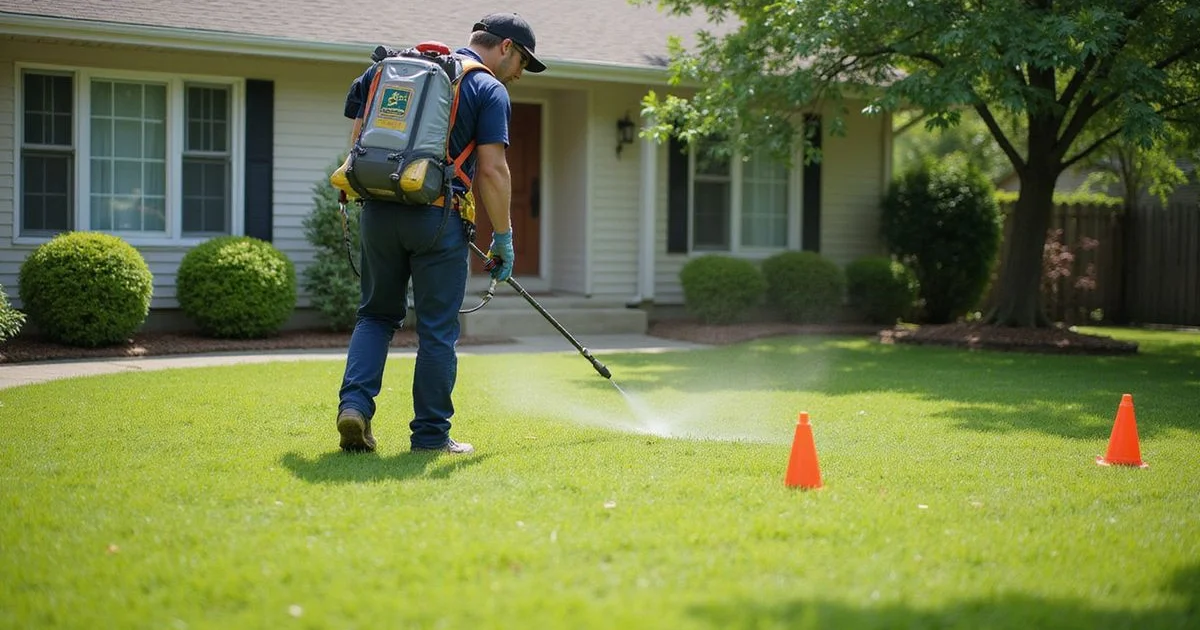
The single most useful piece of information for any lawn treatment is its re-entry time, meaning how long to keep kids and pets off the treated area after application. This varies by product, and a responsible lawn care company will tell you the specific window for whatever was used, rather than a generic “it’s fine once it’s dry.”
| Question to ask | Why it matters |
|---|---|
| What product was applied? | Different products carry different re-entry times and precautions |
| What’s the re-entry time for kids and pets? | The single most actionable piece of safety information |
| Does rain change the timing? | Some products can reactivate or spread if rain follows too soon after application |
| Is there a posted sign or notice after treatment? | Helps you and neighbors know an application recently happened |
Practical steps for a household with kids or pets
- Keep treated areas off-limits until the stated re-entry time has passed, even if the grass looks and feels dry.
- Store any leftover product (if you handle some treatments yourself) well out of reach, in its original container, away from anywhere kids or pets access.
- Wash hands and paws after time on a lawn that’s been recently treated, as a simple precaution even after the re-entry window has passed.
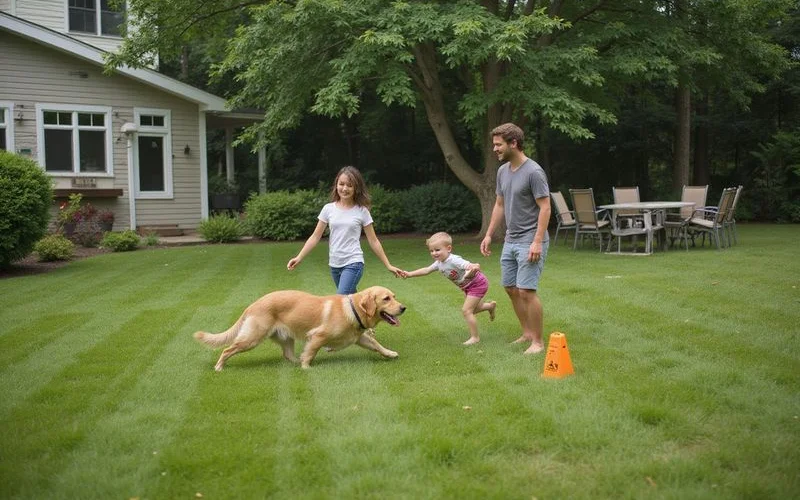
- Ask about pet-specific concerns, since some pets dig, chew grass, or roll in a way that increases contact compared with a child playing on top of the grass.
Organic and reduced-chemical alternatives
Some households prefer to minimize synthetic pesticide and herbicide use altogether, particularly for a yard where kids or pets spend significant time. Organic lawn care programs typically rely on different tools: overseeding with hardier grass varieties, mechanical weed control, and organic-approved products, though the specific approach varies by provider. If this matters to you, ask a company directly what an organic or reduced-chemical program actually includes, since the term gets used loosely across the industry. Timing matters too; the fall yard prep checklist covers when treatments like fall fertilization typically happen each year.
Notifying neighbors and shared spaces
If your yard borders a shared fence, a common play area, or a neighbor’s frequently used side yard, a simple heads-up before a scheduled treatment is a courtesy that also functions as a safety measure, especially if the neighbor has young kids or pets of their own. Some lawn care companies post a small sign in the treated yard automatically after application, which serves the same purpose for anyone passing by who might not otherwise know a treatment happened that day.
Reading a product label yourself
For households that want more than a verbal re-entry time, most lawn treatment products carry a label with specific first-aid information, re-entry intervals, and any special precautions for children or pets. Asking the applicator which product was used, by name, makes it possible to look up that information directly rather than relying entirely on a secondhand summary.
Signs worth watching for
If a pet or child shows unusual symptoms after time on a recently treated lawn, drooling, vomiting, skin irritation, or unusual lethargy, treat it seriously and contact a veterinarian, doctor, or poison control promptly rather than waiting to see if it resolves. This is uncommon when re-entry times are respected, but it’s worth knowing the signs rather than assuming nothing could go wrong.
Finding a provider who’s upfront about this
A lawn care company that volunteers re-entry information and answers product questions plainly is generally a better sign than one that’s vague about what’s being applied. Browsing lawn care and maintenance listings, ranked through a published scoring method, is a reasonable way to compare providers, including ones offering organic or reduced-chemical programs. The Connecticut landscaper directory covers the rest of your yard’s needs if you’re coordinating maintenance with other categories.
Common questions
- How long after a lawn treatment is it safe for kids and pets to go back on the grass?
- This depends entirely on the specific product applied, and can range from a couple of hours once it's dried to a full day or more for certain products. Ask the company applying the treatment for the specific re-entry time for what they used, and follow it rather than guessing.
- Is it safe to let pets on the lawn right after it rains post-treatment?
- Not necessarily. Rain can reactivate or spread some products even after they've dried. If a treatment was recently applied, check with the applicator about how rain affects the re-entry timing rather than assuming it washed the risk away.
- Are organic lawn treatments actually safer?
- Organic and reduced-chemical approaches generally use fewer synthetic pesticides and herbicides, which some households prefer for homes with young children or pets that spend a lot of time on the grass. Ask a provider what's actually in an organic program, since practices vary.
- How do I know what was applied to my lawn?
- A reputable lawn care company should tell you what product was used and its re-entry time without being asked twice. Keep a simple record if you have kids or pets, so you're not relying on memory for the timing.
Related on this site
- Browse lawn care & maintenance providers
- Best lawn care & maintenance in Connecticut →
- Fall yard prep checklist for Connecticut winters
- Free and low-cost lawn care help in Connecticut
- Tree work safety: what to know before a crew climbs your trees
- Preventing slips, falls, and damage from snow and ice at home
- All guides →