Preventing slips, falls, and damage from snow and ice at home
By Dana Whitfield · Updated 2026-08-05
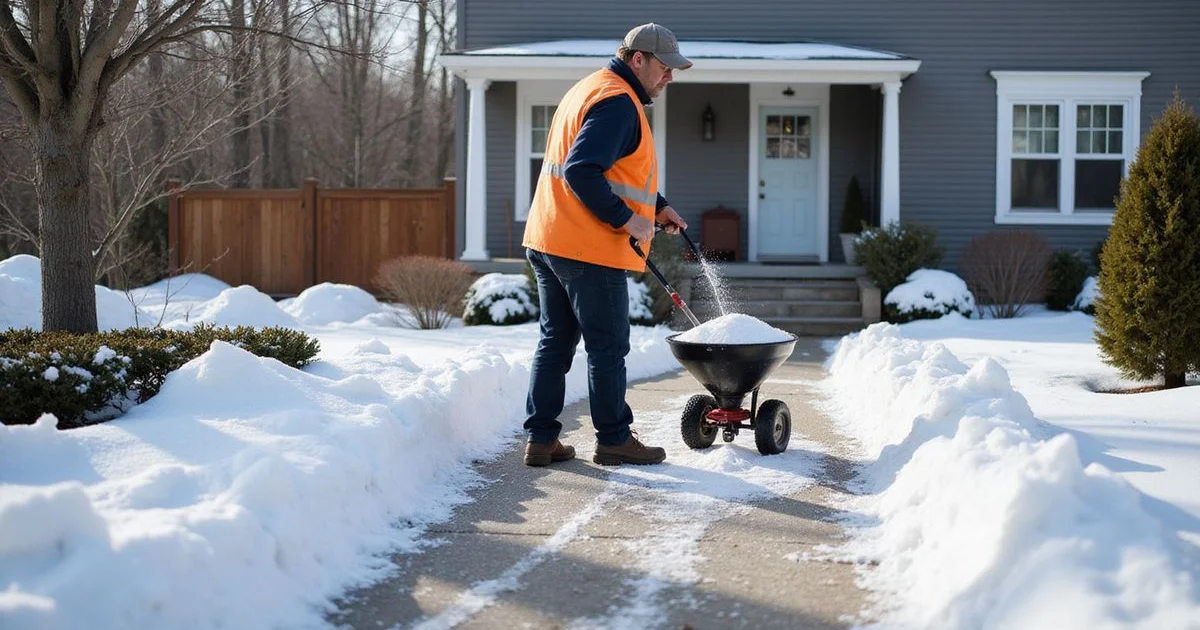
Winter safety around a home is less about any single dramatic hazard and more about a handful of ordinary risks that repeat with every storm: icy steps, a slick walkway, an overloaded roof edge. Managing them consistently matters more than any one clever trick.
The most common hazard: compacted, refrozen snow
Fresh snow is usually easier to deal with than snow that’s been walked on, partially melted, and refrozen into a slick surface. This is why prompt clearing after a storm matters: the longer snow sits and gets compacted underfoot, the more likely it turns into ice that’s harder to remove and easier to slip on.
| Hazard | Why it happens | Prevention step |
|---|---|---|
| Compacted, icy walkways | Foot traffic packs snow before it’s cleared | Clear promptly and reapply ice-melt after each round of shoveling |
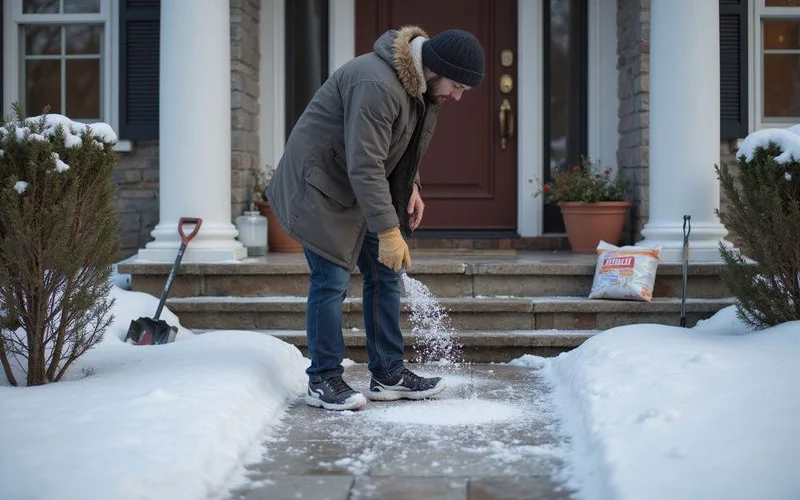
| Icy steps | Steps hold less heat and refreeze faster than open pavement | Treat steps separately, even if the main walkway looks clear |
| Overloaded gutters or roof edges | Heavy, wet snow accumulation | Have a professional assess if snow load looks excessive |
| Black ice on driveways | Thin, hard-to-see ice layer, often from melt-refreeze cycles | Treat proactively before a hard freeze, not just after visible snow |
Practical steps that reduce risk
- Clear promptly after snowfall stops, since fresh snow is easier to remove than compacted or partially melted snow that’s refrozen.
- Treat steps and thresholds separately from the main walkway, since they tend to ice over faster and are a common site for falls.
- Reapply ice-melt through a storm, not just once at the start, since continued snowfall and foot traffic can undo an early application.
- Use handrails where available, and consider adding one to steps that don’t currently have one if icy conditions are a recurring issue.
- Keep an eye on black ice, a thin, often invisible layer that forms during melt-refreeze cycles and is one of the more deceptive winter hazards precisely because it can look like a clear, dry surface.
Pets and ice-melt products
Standard rock salt can irritate paws with prolonged contact and cause stomach upset if a pet licks it off their feet, so pet-safe ice-melt formulations are worth considering for areas pets regularly cross. Wiping paws after time on any treated surface is a simple habit that reduces both irritation and the chance of a pet ingesting residue while grooming.
When it’s more than a shoveling problem
Heavy, wet snow accumulation on a roof occasionally raises real structural concerns, and ice dams at the roof edge are a separate issue tied to attic insulation and ventilation rather than ground-level snow removal. Both are worth a professional look if you notice unusual accumulation, sagging, or interior water stains that suggest melting snow is finding its way inside.
Footwear and simple habits that help
Beyond treating the surfaces themselves, footwear with real tread makes a measurable difference on an icy walkway, and it’s worth keeping a pair by the door specifically for winter rather than relying on whatever shoes happen to be handy. Walking with shorter, flatter steps and keeping hands free rather than carrying an armful of packages also reduces fall risk on a surface that might be slicker than it looks. These habits matter most for guests and delivery drivers who aren’t familiar with which parts of a specific walkway tend to ice over first.
What to do if someone does fall
If a fall happens on your property, checking on the person’s condition comes first, followed by documenting the surface conditions at the time, since this matters if a liability question comes up later. Photographing the area promptly, before further clearing changes what it looked like, is a reasonable step alongside making sure the person is actually okay. The snow and ice removal laws guide covers how that liability question is typically evaluated in Connecticut.
Staying ahead of a storm
For anyone managing this themselves, staying ahead of a storm rather than reacting after the fact is the most reliable approach: treating surfaces proactively before a hard freeze, and clearing in stages during a long storm rather than waiting for it to end. For households that would rather hand this off, browsing snow removal listings, ranked with a published scoring method, is a straightforward way to compare companies on responsiveness during active storms. The Connecticut landscaper directory covers the rest of the yard once winter turns to spring cleanup.
Common questions
- Is rock salt safe to use around pets?
- Some ice-melt products can irritate paws or cause stomach upset if ingested, so pet-safe formulations exist and are worth using if pets have regular access to the treated area. Wiping paws after walks on any treated surface is a simple extra precaution.
- What's the most common cause of slip-and-fall injuries around a home in winter?
- Compacted snow that's refrozen into ice, especially on steps and walkways, is one of the more common causes, since it can look like ordinary snow rather than a slick surface until you're on it.
- How often should walkways be treated during an active storm?
- Reapplying ice-melt after each round of shoveling, rather than a single application before the storm, keeps surfaces from refreezing as snow continues to fall and gets compacted underfoot.
- Are ice dams on the roof a snow removal issue or a different problem?
- Ice dams form from heat escaping through the roof melting snow that then refreezes at the eaves, which is more of an insulation and ventilation issue than a yard maintenance one. It's worth mentioning to a roofing professional separately from ground-level snow and ice management.
Related on this site
- Browse snow removal providers
- Best snow removal in Connecticut →
- Snow removal cost in Connecticut: per-push pricing vs. seasonal contracts
- Snow and ice removal laws in Connecticut: what homeowners must know
- Tree work safety: what to know before a crew climbs your trees
- Lawn chemical and pesticide safety for kids and pets
- All guides →