When to turn your sprinkler system on and off in Connecticut
By Dana Whitfield · Updated 2026-07-21
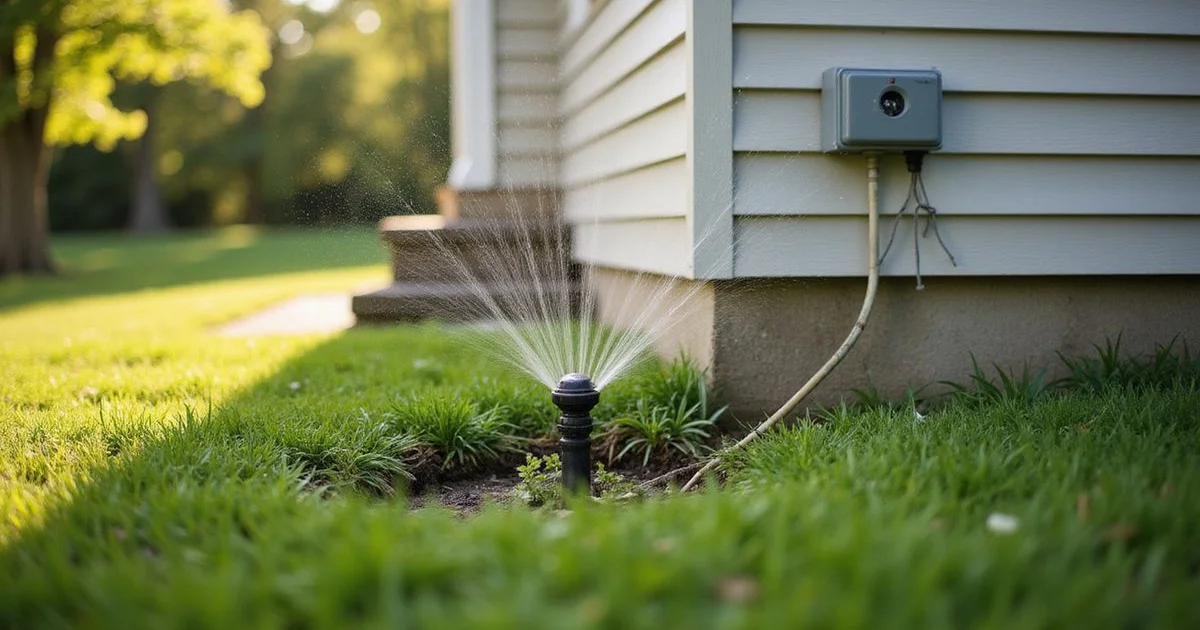
An irrigation system is easy to forget about until something goes wrong, and the two moments that matter most are exactly the two that are easiest to put off: spring start-up and fall shutdown. Getting the timing right on both ends protects the system and keeps it running the way it’s supposed to.
Spring start-up: why timing matters
Turning a system on too early, while a hard freeze is still possible, risks damage if water sits in exposed lines or components overnight. Most Connecticut systems come back online sometime in mid-to-late spring, once overnight freezes have mostly passed. Rather than picking one calendar date, it’s more reliable to watch the weather pattern and wait until the risk of a hard freeze has meaningfully dropped.
Start-up itself typically involves slowly pressurizing the system, checking each zone for leaks or damaged heads, and adjusting the controller’s schedule for the season ahead.
Fall shutdown: the step that prevents the expensive mistake
Shutdown matters more than start-up, because getting it wrong is what causes real damage. Water left in exposed pipes, valves, or the backflow preventer can freeze once temperatures drop, and ice expands with enough force to crack fittings, valves, and pipe sections. That damage often isn’t visible until the following spring, when the system is turned back on and the cracked components start leaking or failing. Sprinkler shutdown is just one item on the fall to-do list; the fall yard prep checklist covers the rest of what Connecticut winters require before the ground freezes.
| Task | Timing | What happens if skipped |
|---|---|---|
| Spring start-up | Mid-to-late spring, after freeze risk drops | Minimal risk if you simply wait a bit longer than necessary |
| Fall shutdown / winterization | Before the first hard freeze, typically October-November | Frozen water can crack pipes, valves, and the backflow preventer |
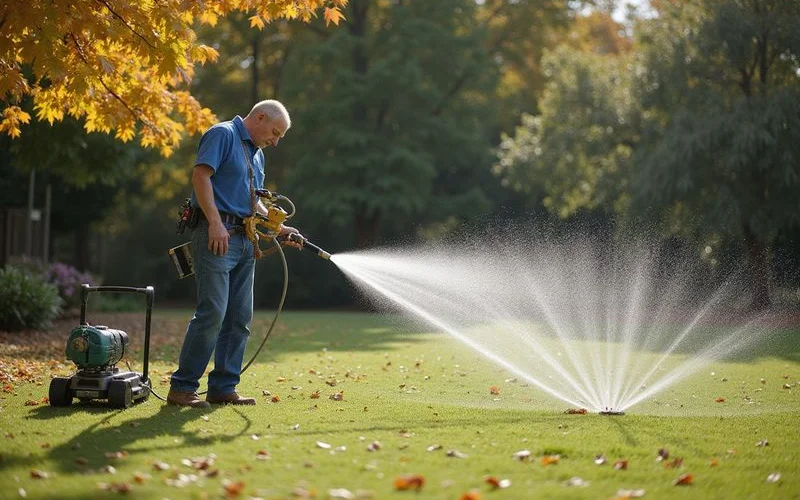
What a proper shutdown involves
A thorough winterization typically clears water out of the entire system, not just the visible above-ground components. Many Connecticut properties benefit from a compressed-air blowout, which forces remaining water out of buried lines that a simple drain valve won’t fully clear on its own. This is the part of the process that most benefits from the right equipment, since an incomplete blowout can leave enough residual water to cause the same freeze damage the process is meant to prevent.
Watching the calendar vs. watching the weather
Because Connecticut’s freeze timing shifts somewhat from year to year, treating any specific date as a hard rule can backfire in an unusually early or late season. A mild fall might allow shutdown to wait a little longer, while an early cold snap means acting sooner than usual. Checking the extended forecast in early fall, rather than relying purely on habit from a previous year, is the more reliable approach.
Mid-season adjustments worth making
Beyond the two big seasonal moments, the controller’s schedule usually needs adjusting a few times across the growing season rather than being set once in spring and left alone. Early spring calls for less watering than the height of summer, and a stretch of heavy natural rainfall is a good reason to skip a scheduled cycle rather than water on top of it. Smart controllers that adjust automatically based on local weather data can handle some of this, but a basic timer system depends on the homeowner checking in periodically.
Signs the system needs attention before the season’s big moments
A zone that runs noticeably longer or shorter than the others, a sprinkler head that doesn’t pop up fully, or a soggy patch that wasn’t there before are all worth investigating rather than ignoring until the next scheduled service. Catching a small leak or a stuck valve mid-season is considerably cheaper than discovering it’s been running (or not running) incorrectly for months.
Getting it done reliably
Because a missed or incomplete shutdown is the expensive mistake, many homeowners prefer to have it handled by someone experienced with the specific equipment involved, rather than risk an incomplete DIY attempt. Browsing irrigation and sprinkler listings, ranked through a published scoring method, is a reasonable way to find a company for seasonal start-up and shutdown. The Connecticut landscaper directory also lists companies for the rest of your yard if you’re coordinating multiple seasonal tasks at once.
Common questions
- When should an irrigation system typically start up for the season in Connecticut?
- Most systems start up in mid-to-late spring, once the risk of a hard freeze has mostly passed. The exact week varies year to year with the weather, so it's more useful to watch conditions than to circle one fixed date.
- When should the system be shut down in the fall?
- Shutdown typically happens before the first hard freeze, usually sometime in October or November depending on the year, since water left in the lines can freeze and crack pipes or components.
- What actually happens if I forget to winterize the system?
- Water remaining in the pipes, backflow preventer, or sprinkler heads can freeze and expand, cracking components. Repairs after a freeze are often more expensive than the cost of a proper winterization in the fall.
- Can I do the shutdown myself instead of hiring someone?
- Simple systems can sometimes be manually drained, but most residential systems benefit from a compressed-air blowout to fully clear the lines, which requires specific equipment most homeowners don't own.