Landscaping and yard care for seniors and aging in place
By Dana Whitfield · Updated 2026-08-25
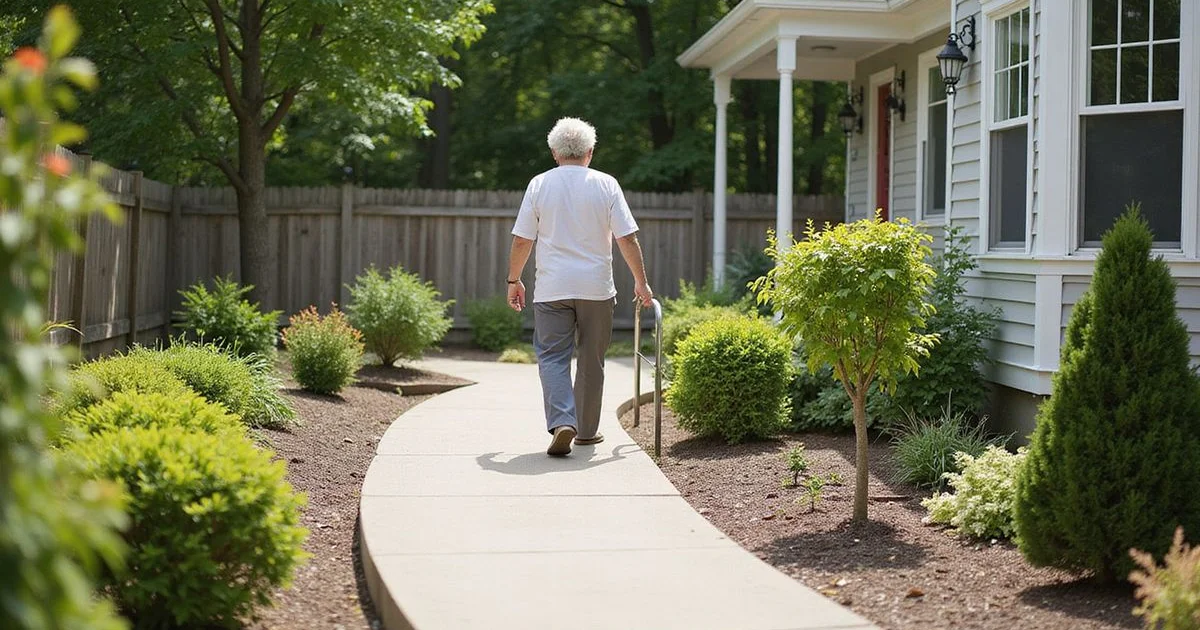
Staying in a longtime home often comes with a yard that’s gotten harder to maintain at the same pace as before, whether that’s a homeowner managing their own aging or a family member helping a parent. The good news is that most of the practical fixes are modest changes, not a full property overhaul.
Common hazards worth addressing
- Uneven or cracked walkways. A trip on an outdoor path can lead to a fall that’s more serious than a similar stumble indoors, since outdoor surfaces are often harder and the ground less forgiving.
- Poor lighting along paths and steps. Adequate outdoor lighting reduces the risk of a misstep after dark, particularly along the route from a driveway or car to the front door.
- Steep grade changes without handrails. Slopes and steps that were manageable years ago can become genuinely risky as balance and strength change.
- Overgrown areas blocking clear sightlines. Beyond the tripping risk, overgrowth near entryways can also raise safety concerns around visibility.
Changes that reduce physical demand without giving up the yard
| Change | What it addresses |
|---|---|
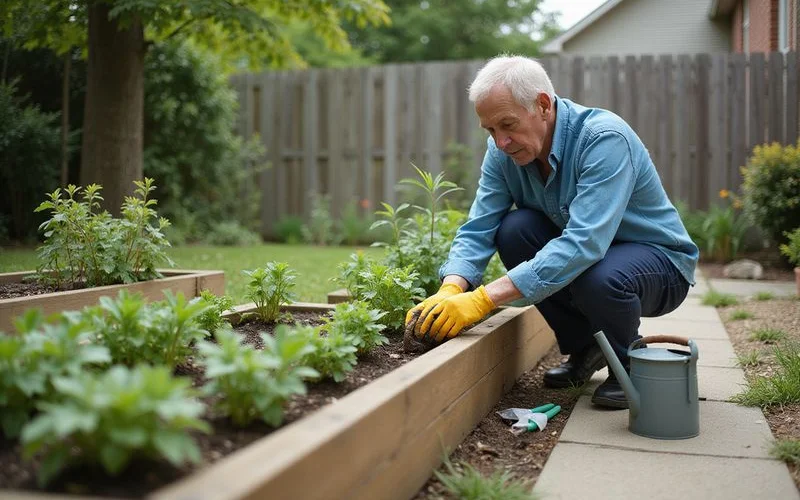
| Raised garden beds | Reduces bending and kneeling for anyone who wants to keep gardening |
| Reducing lawn area in favor of low-maintenance beds | Less mowing and edging required overall |
| Hardier, low-maintenance plant choices | Less frequent watering, pruning, and replacement |
| Repairing or replacing uneven walkway sections | Directly reduces fall risk along frequently used paths |
| Adding handrails to steps or steep sections | Provides support on the areas most prone to a stumble |
| Improved path and entryway lighting | Reduces missteps after dark |
Deciding what to keep doing and what to hand off
Many seniors aging in place still enjoy parts of yard work, light watering, deadheading flowers, or tending a small raised bed, while finding the physically demanding parts, mowing, heavy pruning, and seasonal cleanup, increasingly burdensome. There’s no need to choose between doing everything yourself or hiring everything out. A common approach keeps the enjoyable, low-effort tasks in-house while hiring seasonally or year-round for the physically demanding ones. For anyone doing this for the first time, the first-time homeowner’s guide to hiring a landscaper covers what to check before signing with a company.
Snow and ice deserve special attention
Winter conditions raise the stakes considerably for anyone with balance concerns or mobility limitations. Beyond the general steps that help any household, arranging for reliable, prompt snow clearing matters more here, since a senior who falls on an icy walkway faces a meaningfully higher risk of serious injury than a younger household member would. If a seasonal snow contract is otherwise optional for a household, it’s worth treating as closer to essential when an older resident depends on that walkway daily.
Considering the whole property, not just the yard
Aging-in-place planning often starts indoors, with bathroom grab bars or single-floor living, but the yard is frequently the last piece considered even though it’s used daily for getting the mail, walking to a car, or simply sitting outside. Approaching the yard with the same intentionality as an indoor safety review, rather than treating it as an afterthought, tends to produce a more genuinely age-friendly property overall.
Talking with family about the yard
If you’re a family member noticing a parent’s yard has become harder to keep up with, it can be a useful, lower-stakes way to open a broader conversation about aging in place, since it’s a concrete, practical topic rather than an abstract one. Framing changes around safety and continued enjoyment, rather than taking over completely, tends to go over better than treating it as a loss of independence.
Pacing changes over time
Not every change needs to happen at once. Many families start with the highest-risk item, often an uneven walkway or a missing handrail, and phase in the rest over a season or two as budget and priorities allow. Treating this as an ongoing, low-pressure adjustment rather than a single overwhelming project tends to keep both the cost and the disruption manageable.
Finding help for the physically demanding parts
For families or seniors looking to hire out mowing, seasonal cleanup, or larger projects like walkway repair, the Connecticut landscaper directory organizes companies by category, and a published scoring method weighs review sentiment and reliability, which matters when consistency of service is the priority rather than a one-time job.
Common questions
- What's the most common yard hazard for seniors aging in place?
- Uneven or cracked walkways are one of the most common hazards, since a trip on an outdoor surface can lead to a serious fall in a way that's harder to recover from than a similar stumble indoors.
- Are raised garden beds worth it for an older gardener?
- Many older gardeners find raised beds reduce the bending and kneeling that makes traditional ground-level gardening physically harder over time, while still allowing them to keep gardening as a hobby.
- Should an aging homeowner switch to a lower-maintenance yard?
- It depends on how much of the current maintenance they enjoy doing themselves versus find burdensome. Reducing lawn area, choosing hardier plants, or adding mulch beds are common ways to lower the physical demands without giving up the yard entirely.
- Is it worth hiring a landscaper just for the physically demanding tasks?
- Many families and seniors handle it this way, keeping enjoyable, low-effort tasks like light watering or deadheading flowers while hiring out mowing, heavy pruning, and seasonal cleanup.