Do you need a permit for a retaining wall or patio in Connecticut?
By Dana Whitfield · Updated 2026-07-16
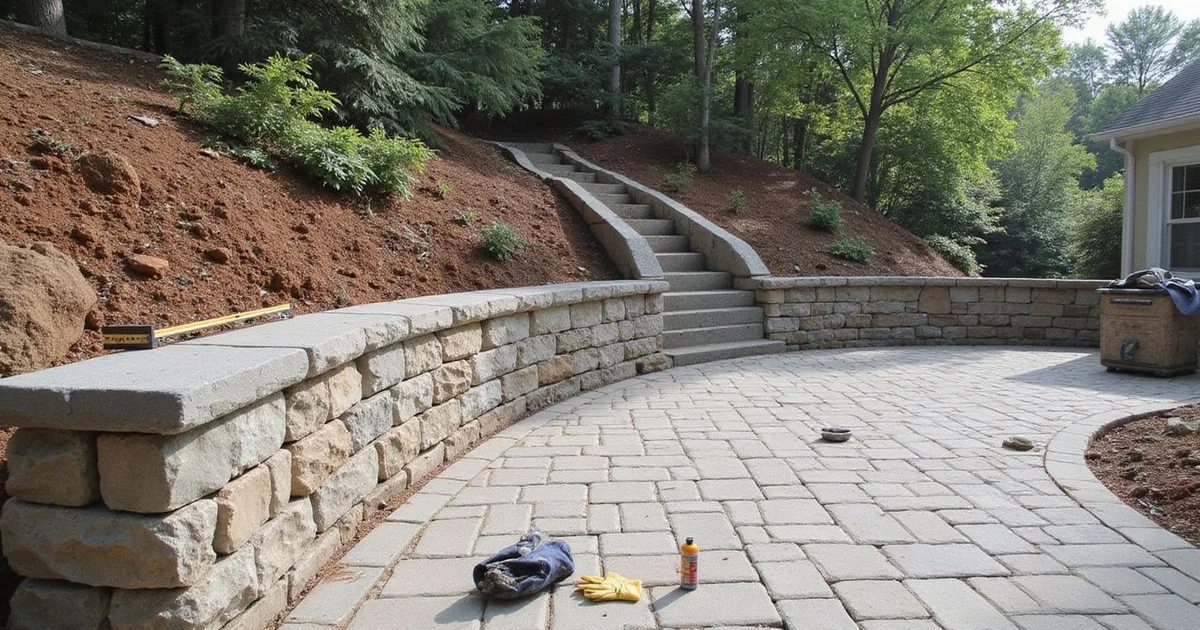
This article gives general, non-legal guidance on hardscape permitting patterns in Connecticut. Rules are set by individual towns and change, so confirm requirements with your local building department before starting a project.
A patio or retaining wall project can stall before it starts over a question that’s easy to overlook: does this need a permit. The honest answer is that it depends on your specific town, the height or scope of the structure, and sometimes how close it sits to a property line.
The general pattern
Connecticut delegates most building permit decisions to individual towns rather than setting one uniform statewide rule for hardscape projects. That means the same retaining wall height might require a permit in one town and not in the next. A few patterns tend to hold broadly, though the exact numbers vary:
| Project type | Common general pattern | Why it varies |
|---|---|---|
| Short retaining wall (commonly under about 4 feet) | Often exempt in many towns | Height thresholds differ by municipality |
| Taller retaining wall | More likely to require a permit and engineering review | Taller walls carry more structural risk if they fail |
| Ground-level patio | Frequently exempt if no structural connection to the house | Some towns still require a permit near property lines or utilities |
| Wall or patio affecting drainage toward a neighbor or the street | More likely to draw a permit or review | Grading changes can shift water flow off your property |
Why height and engineering matter for walls
Taller retaining walls hold back significantly more soil pressure, which is why many towns require an engineered design and permit once a wall crosses a certain height. This isn’t just bureaucracy: a wall built without accounting for soil pressure and drainage behind it can fail, sometimes years later, in a way that’s expensive and occasionally dangerous to fix. A contractor experienced with retaining walls in your area will typically know the local threshold and design accordingly, including proper reinforcement and drainage behind the wall.
Property lines and drainage
Even for projects that don’t need a permit, changes that affect water runoff onto a neighbor’s property or into the street can create disputes or code issues separate from the permit question itself. Grading a patio or wall project to direct water properly, rather than just toward the nearest low point, avoids a common source of neighbor complaints and potential liability. That liability question follows a similar general pattern to the one covered in the tree fall liability guide, where foreseeability tends to matter more than which property something started on.
HOA and deed restrictions, separate from the permit question
Beyond what the town requires, some properties carry HOA rules or deed restrictions that add another layer of approval for a hardscape project, regardless of whether a municipal permit is needed. These private restrictions can cover things like wall materials, fence height along a shared boundary, or approval processes that run through a homeowners association board rather than a town office. It’s worth checking your specific deed and any HOA documents alongside the municipal permit question, since satisfying one doesn’t guarantee compliance with the other.
What to ask your contractor
Ask directly whether the quote includes pulling any required permits, and whether the design accounts for your town’s specific height or setback rules. A contractor who brings this up unprompted, rather than waiting for you to ask, is usually one with real local experience rather than someone treating every town’s rules as identical.
Combining a wall and a patio in one project
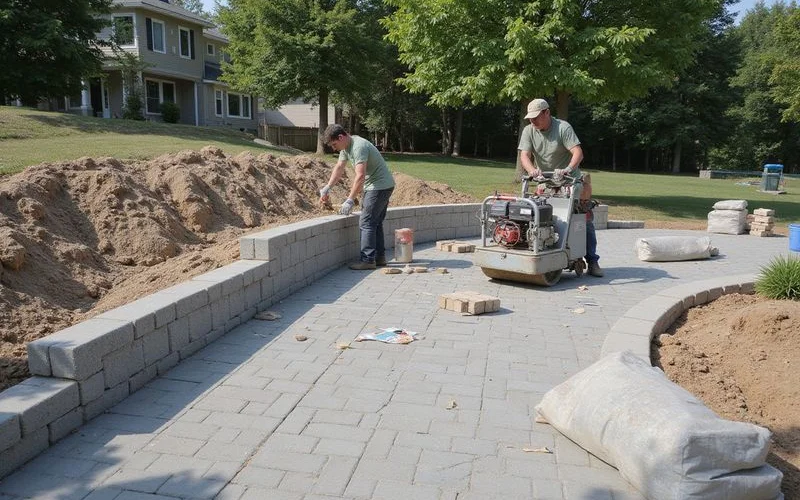
Projects that pair a retaining wall with an adjoining patio sometimes get evaluated together by a building department rather than as two separate questions, since the wall’s height and drainage design directly affect what’s safe to build on top of or next to it. If your project combines both, ask your contractor whether the permit application covers the full scope or just the wall, so nothing gets built without the right sign-off partway through.
Checking the actual rule
Because these requirements are set locally, the building department or planning office for your specific town is the authoritative source, not a general guide like this one. A quick call or visit before finalizing a design avoids the cost of redesigning a project that turns out to need engineering review partway through.
Browsing hardscaping and masonry listings, scored using a published method based on reviews and completeness, is a good way to shortlist contractors experienced with permitting in your area. The Connecticut landscaper directory covers the rest of the categories if your project also involves planting or irrigation work.
Common questions
- Do all retaining walls need a permit in Connecticut?
- Not necessarily. Many towns exempt short walls below a certain height, commonly around four feet, from permit requirements, but the exact threshold and rules vary by municipality. Confirm with your local building department before starting.
- Does a patio installation typically require a permit?
- A ground-level patio often doesn't require a permit in many towns, but that can change if it involves excavation near a property line, a structural connection to the house, or electrical work for lighting. Check locally.
- What happens if I build a wall or patio without a required permit?
- Consequences vary by town and can include fines, a stop-work order, or having to remove or modify the structure. It can also complicate selling the home later if the work isn't on record.
- Does my landscaping contractor handle the permit process?
- Many established contractors pull permits as part of the job and build the cost into their quote. Ask directly whether permitting is included or whether you're expected to handle it yourself.